Introduction to Uizard and Its Role in Design Evolution
In the ever-evolving landscape of digital design, Uizard has emerged as a transformative tool for UI/UX professionals, startups, and even non-designers. It is an AI-powered design platform that allows users to create wireframes, mockups, and fully functional prototypes in a fraction of the time traditional design methods require. By combining artificial intelligence with an intuitive interface, Uizard enables individuals and teams to rapidly visualize and iterate on digital product ideas without deep design or coding expertise. What makes Uizard particularly disruptive is its ability to convert hand-drawn sketches into digital designs, automatically apply design themes, and facilitate real-time collaboration. This positions it as more than just a design tool—it is a productivity accelerator for modern product teams.
AI Integration and Intelligent Design Automation
At the core of Uizard’s appeal is its use of artificial intelligence to automate and streamline the UI/UX design process. The AI is trained to recognize design patterns and user input such as sketches or screenshots of apps, and convert them into editable design components. This capability saves valuable time in the early phases of product development and allows designers to focus more on user experience rather than repetitive design tasks. For instance, a rough sketch on paper or whiteboard can be uploaded into Uizard, and the AI will intelligently interpret buttons, text boxes, and layout structures to generate a digital version of the interface. The platform also suggests UI improvements and automatically aligns elements for a cleaner look, reducing the need for manual adjustments. Such features make Uizard particularly attractive to agile development teams who need to uizard iterate quickly based on user feedback.
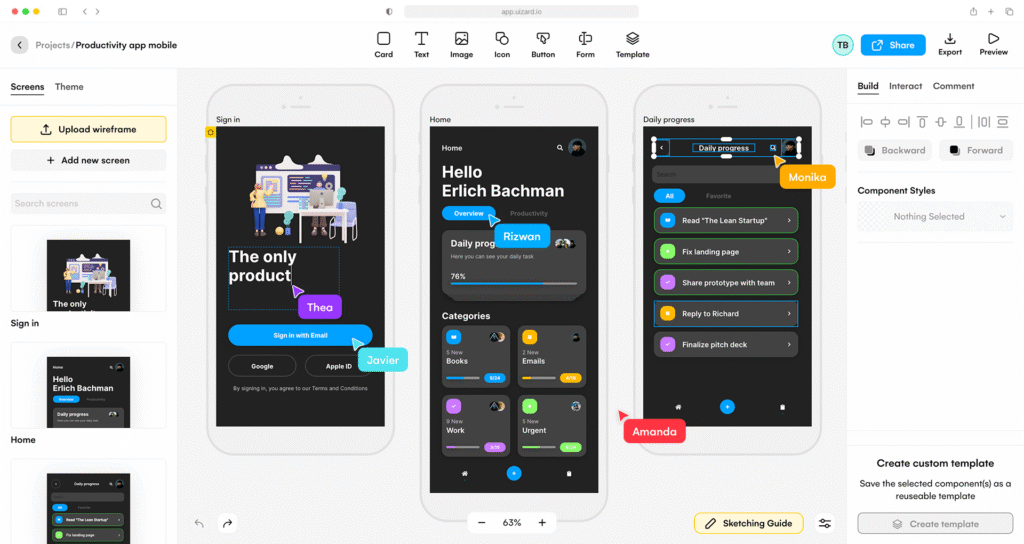
Ease of Use and Accessibility for Non-Designers
Unlike traditional design software like Adobe XD or Figma, Uizard is built with accessibility in mind. Its drag-and-drop functionality, pre-built templates, and easy-to-navigate interface cater to users with limited or no design experience. This democratization of design allows entrepreneurs, product managers, marketers, and developers to participate in the creative process without relying solely on designers. Uizard’s learning curve is minimal, which makes it a valuable tool for early-stage startups looking to pitch their product ideas with visual prototypes or for educators teaching UI/UX concepts. The platform provides a variety of design templates for web and mobile apps, reducing the time needed to get started and allowing users to produce professional-looking prototypes with ease.
Collaborative Capabilities and Real-Time Editing
Collaboration is a critical aspect of modern digital product development, and Uizard excels in this area by enabling real-time multi-user editing and feedback sharing. Similar to tools like Google Docs or Figma, Uizard allows teams to work on the same design simultaneously, making remote collaboration seamless. Stakeholders can leave comments, suggest changes, and track revisions without disrupting the workflow. This feature not only enhances communication between teams but also accelerates the design iteration cycle. Teams can gather feedback from clients or users and implement changes instantly, ensuring that the product vision remains aligned throughout the development process.
Use Cases and Industry Applications
Uizard is used across a wide range of industries, from tech startups and software development firms to educational institutions and product design consultancies. Startups use it to prototype MVPs (Minimum Viable Products) rapidly and validate ideas before committing to full-scale development. In education, instructors utilize Uizard to teach students the fundamentals of design thinking and user interface creation. It is also gaining popularity among UX consultants who need to produce quick turnarounds on client projects or test multiple design concepts before settling on a final version. Uizard’s adaptability to different workflows and its ability to integrate with other project management tools make it a versatile solution in the digital design ecosystem.
Conclusion: The Future of UI/UX with Uizard
Uizard is redefining what it means to design user interfaces by breaking down the barriers traditionally associated with UI/UX design. With its AI-driven capabilities, user-friendly interface, and powerful collaboration tools, it is enabling faster, smarter, and more inclusive design practices. As technology continues to evolve and teams become more agile, platforms like Uizard will likely play a central role in shaping the future of digital product development. Whether you’re a seasoned designer looking to boost efficiency or a founder aiming to visualize an app idea, Uizard offers a compelling solution that combines innovation with accessibility.